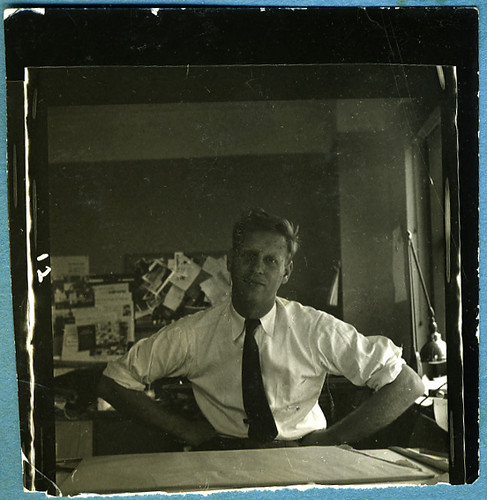
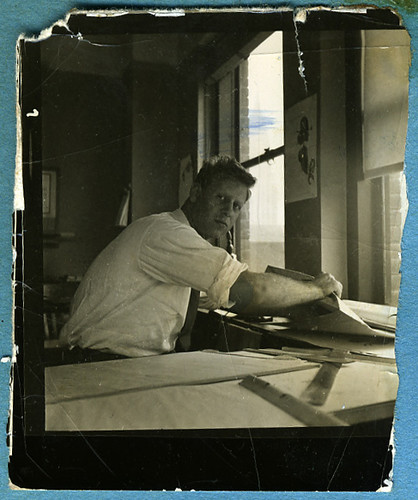
Recently, I had the excellent opportunity of interviewing Jon Graboff, asking him if he could enlighten us about his father, illustrator and designer Abner Graboff. Jon was gracious enough to share some fascinating stories, as well as family photos! (All photos courtesy of Jon Graboff.)
So, who
was Abner Graboff? Let's find out....
Ward: First of all, there's not much out there on your father and his career. For what little I've gathered, all I know is that he worked in the commercial art world (advertising, etc.) as a designer and art director, as well as an illustrator, and then he worked on children's books. I'd love to hear about Abner's early career: how he got into art and design. Did he go to school? If so, where?Jon: My father, the first of two sons, was born on June 28, 1919 to a couple of Russian immigrants, Joseph and Sonia, who owned and operated a laundry business in East Orange, New Jersey. Ira, his younger brother who would later become a Cooper Union educated architect, was born 6 years later.
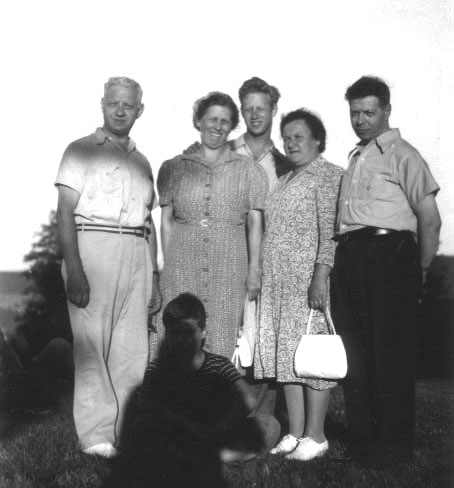
Date unknown, but possibly late-1930's.
Abner Graboff is in the back middle, with his parents on the left (his right). The other adults are unidentified. The boy in the shadow might be Abner's younger brother Ira, but it's hard to tell.The family business, which had already been struggling through the depression, was dealt another blow by Joseph’s death of colon cancer at the age of 48… sometime during the mid 1930’s. Both my parents were heavily impacted by the depression and is some ways, were classic depression kids. When my father died, I found about a half dozen bank accounts with small amounts of money stashed in them. I guess he didn’t want to concentrate his wealth… in case any occurred… which it didn’t!
I’m not exactly sure when my father became interested in art, but he was apparently set on that path because he applied and was awarded a full scholarship to Parson’s School of Design in New York City after finishing high school. He told me that, at that time, Parson’s “wasn’t a very good school” and he transferred, with another full scholarship to another school where he completed his education. He told me that this school no longer exists and I don’t recall its name.
At the start of America’s involvement in WWII, dad took advantage of a draft deferment in light of the needs of the family business. He said that that was fine with him having no keen interest in entering the armed forces. However, as the war heated up and more and more men were being called into service, he told me that “it was a matter of time before he was drafted and thought that the best way to “have some control as to where he ended up”, was to enlist and request an area of service other than the infantry. He entered the army signal corps and, because of his background in art, was sent to drafting school and learned the “art” of drafting schematics for radios. After his army drafting school experience, he told me that it was his ambition for the duration, was “to never do anything army related again”. With the exception of being assigned the task of painting big white stars on the sides of jeeps for a day, he seemed to have successfully attained his service ambitions and a series of watercolor paintings, done overseas in England and France, resulted.
A side note to the star painting episode, my father said he couldn’t remember the formula for drafting a five pointed star and was scratching versions of it in the dirt when another soldier wandered by and asked what he was doing. This fellow knew how it was done and showed him, and Sergeant Eddie Rader of Brooklyn, New York would remain my father’s closest friend until the end of dad’s life.
After my father’s discharge, he met and three months later, married another East Orange native, Vivian Linde, started his career as a freelance graphic designer and raised 3 sons. Michael, born in 1951 and twins Paul and me in 1954.

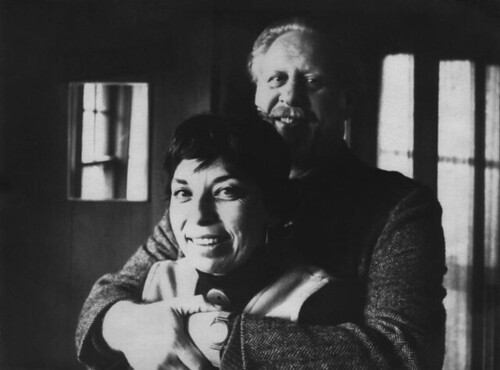
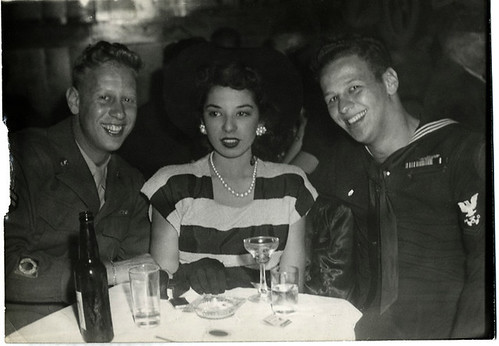
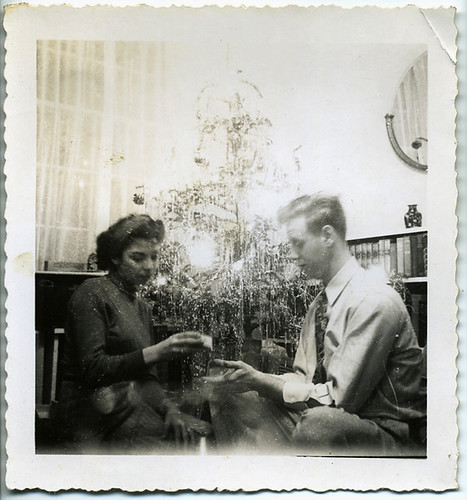
Abner Graboff with wife Vivian (née Linde), 1945.
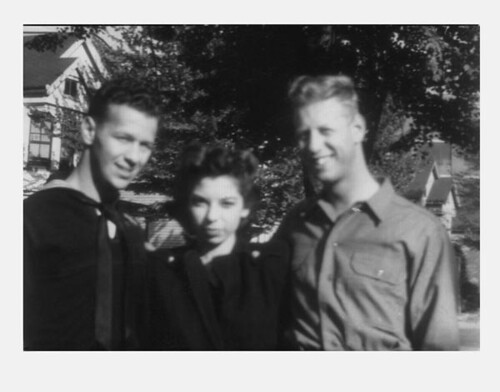
Brother Ira, wife Vivian, and Abner Graboff, 1945.

Abner created this card, announcing the arrival of their twins Jonathan & Paul in 1954. The top part is the front of the announcement, and the bottom part is the back.
By the way, this is the first time it's being shown outside the family. Many thanks to Jon Graboff for sharing it with us!
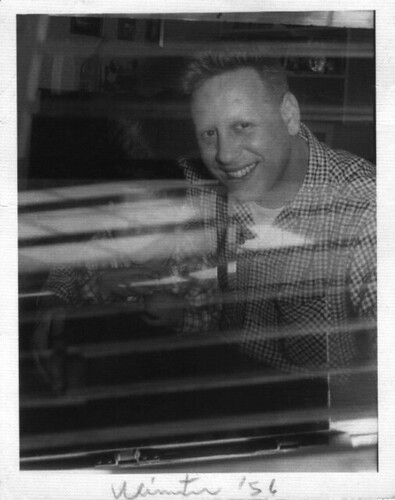
Abner Graboff in the Winter of '56. Looks like older son Michael in the shot (hard to see).
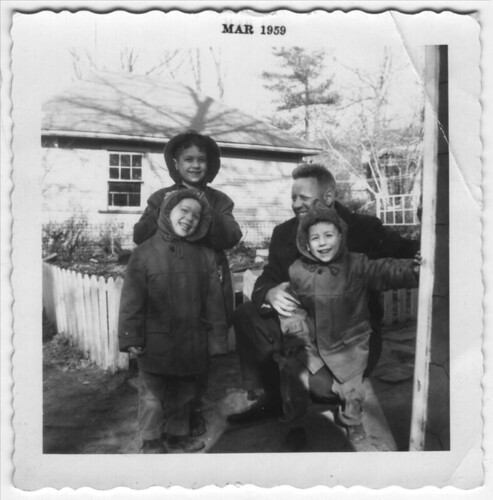
Abner with sons Michael (in back), and twins Jon & Paul.
W: Did he start in the commercial/advertising world right away, or did he do other types of jobs before working in that field?J: I don’t believe that my father ever worked for anyone, preferring freelance work and I don’t recall my dad doing a lot of work in advertising. He was a bit of a left-winger and didn’t enjoy the corporate world… it reminded him too much of his army experience. I do remember a time when he had been offered a huge job for Dow Chemical in the late 1960’s. It was at the height of the Viet Nam war and Dow Chemical was the largest manufacturer of napalm which was being dumped in huge quantities all over southeast asia. He talked about feeling conflicted by his obligations as a breadwinner and his moral objections to war and warfare… he turned the job down.
He apparently did a lot of work in the early days of television when graphics were done on clear celluloid and scrolled in front of a camera lens. My brother Michael told me that dad mentioned to him that he had designed the CBS “eye” logo but didn’t receive credit for it. The credit went instead to the chief art director at the network. Perhaps I’m unduly influenced, but that logo does remind me of my father’s graphic style a great deal.
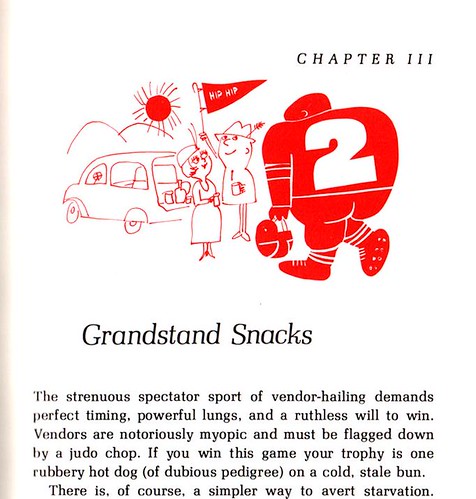
W: Are there any interesting stories that he'd tell you about his work?J: Throughout my father’s career, he did hundreds of book jacket designs and I once asked him, in a slightly condescending way, if he enjoyed that kind of work? He said he loved it because he had to nail the vibe of the book in a single illustration and when he got it right, that it was very satisfying. There was a long period of time when I could walk into a bookstore, look around, pick up a book and look at the jacket design credit… and more often than not, find his name. Later on, I started to get fooled. Other designers were either copying or being heavily influenced by his style.
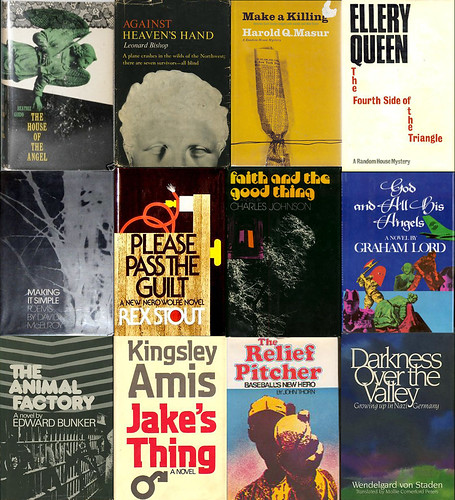 A collection of various dust jacket designs by Abner Graboff from 1957 to 1981. (Click on image to read details.)
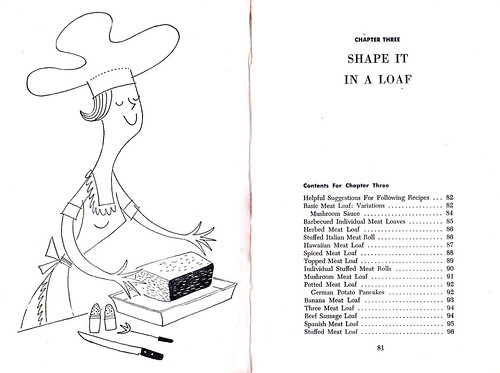
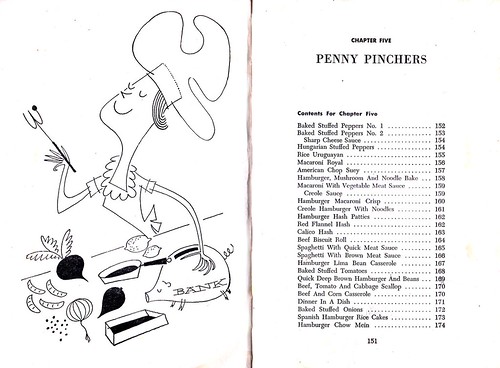 From The Hamburger Cook Book by Esther K. Schwartz. 1950.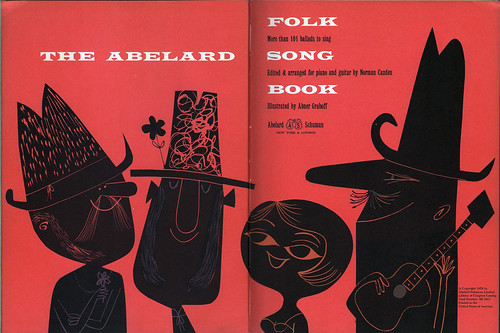
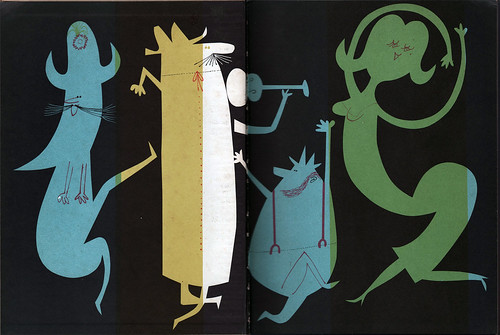
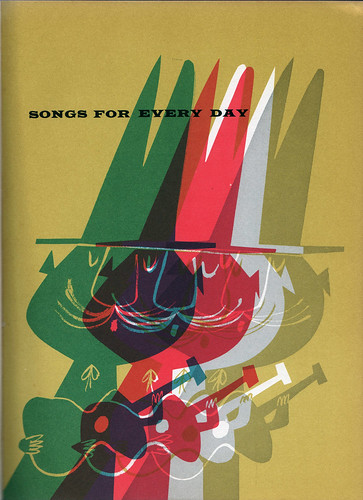
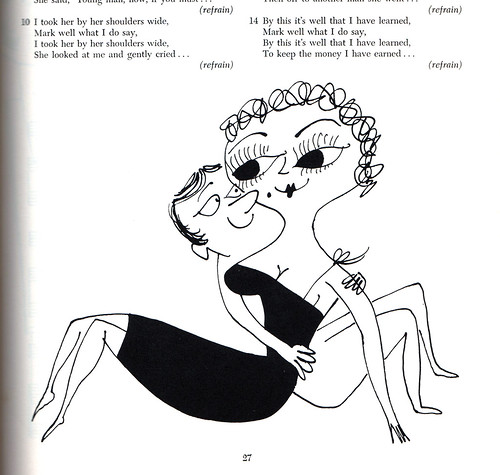
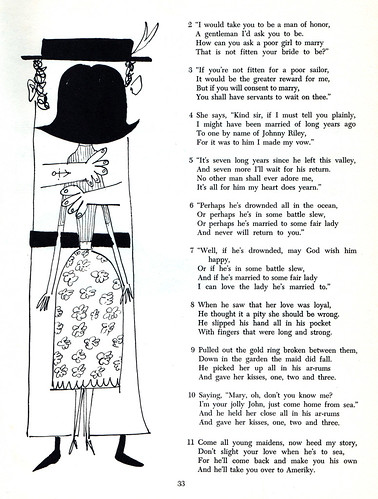 From The Abelard Folk Song Book, 1958.W: How did he make the transition from commercial artist to children's book illustrator? Did he do both at the same time?
J: There never was a “transition” from one area of my father’s career to another… it was all simultaneous. He never compartmentalized his design interests. As he got into children’s book illustration, he carried on with all the other work he was doing. One has to remember that he was a freelance designer with a young family and couldn’t afford the luxury of doing just one thing. Knowing him, I don’t think he ever wanted to do just one thing… he enjoyed it all.
I asked him why he stopped illustrating children’s books. He said he “had a bad agent and never made any money” doing them! He continued drawing these characters and they would turn up in letters, and book treatment ideas that never went any farther. When he died, I found something fascinating as I was going through the stuff in his office. My mother had told me that dad’s annual income could fluctuate by as much as a third depending on how much self-promotion he did… something he never felt very comfortable doing. Going through a file cabinet, I discovered files labeled with the names of art directors. I realized that when he wasn’t particularly busy, he would stockpile personalized cartoons, which he would slip into an envelope from time to time and mail to remind people that he was around and thinking of them.
W: One thing I love about your father's children's books is how radical a departure he took from what was considered the "norm" at that time during the 50's: he definitely did not do your typical "Dick & Jane" style of illustration. I'm curious, did your father ever mention who his influences were?J: My father seemed to dislike complicated work. He’d say “too fussy”. He was drawn more toward artists who worked in bold strokes like Picasso (he liked his sense of humor), Braque and Miro’s later collages… and abstract impressionists particularly Kline and Rothko. He adored Rockwell Kent and I have a Kent illustrated copy of Moby Dick that dad bought when he was in art school and is dated in my father’s hand, 1940.
It’s hard for me to access his style as a “radical departure”… they were the books that were around as we were growing up and he was far too modest to crow about these kinds of things. I do have a friend who was doing some work with Maurice Sendak quite a few years ago. He generally described Sendak as intentionally oblivious to any other illustrators and claimed to be unaware of even the most well known ones. My friend happened to mention that he was heading into the city to meet me for dinner, and Sendak asked if I was any relation to Abner Graboff? Sendak astonished my friend by saying, “I wonder what ever happened to Abner Graboff… he was really good”.
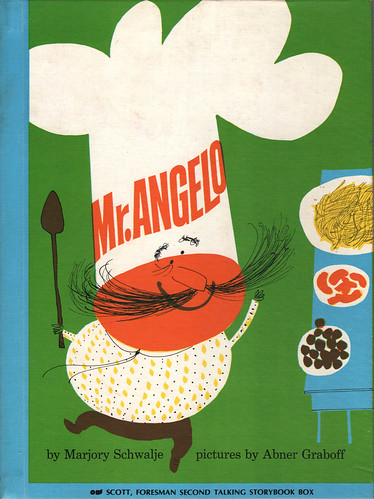
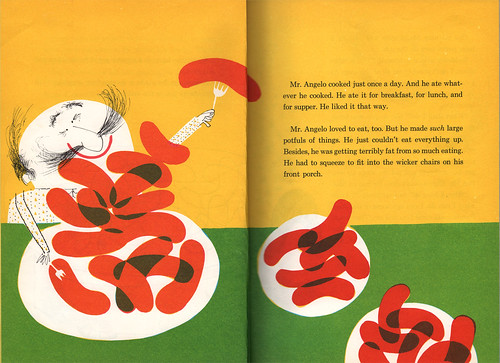
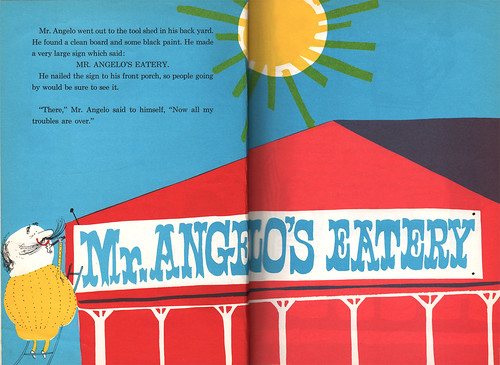
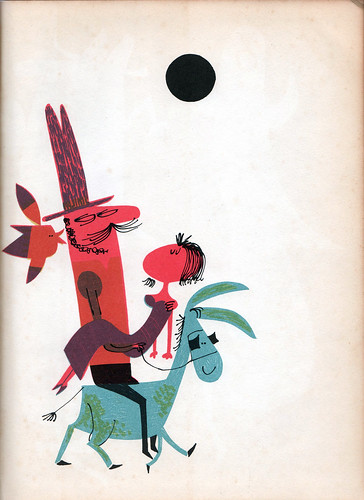
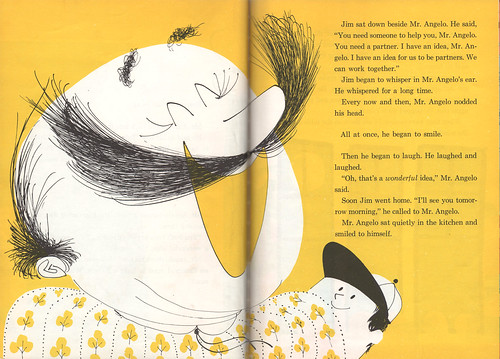 From Mr. Angelo, 1960.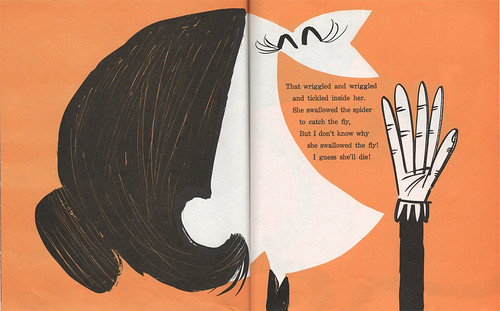
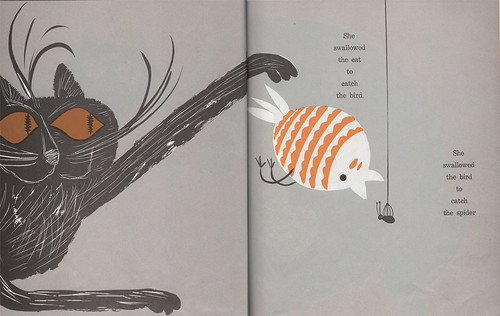
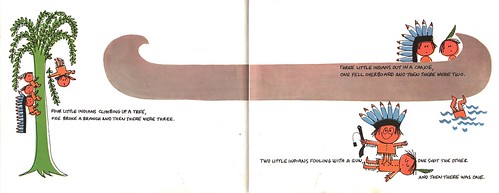
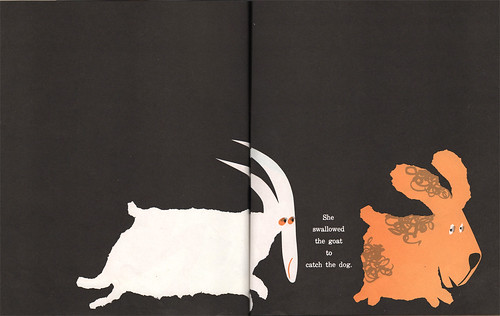 From I Know an Old Lady, 1961.W: I love the stylization of his characters, the way he used simple shapes and color to create sophisticated compositions. Do you happen to know what materials he used? Cut paper? Ink? Pencils?
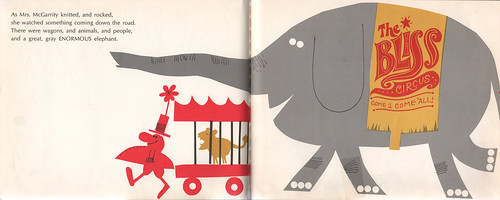
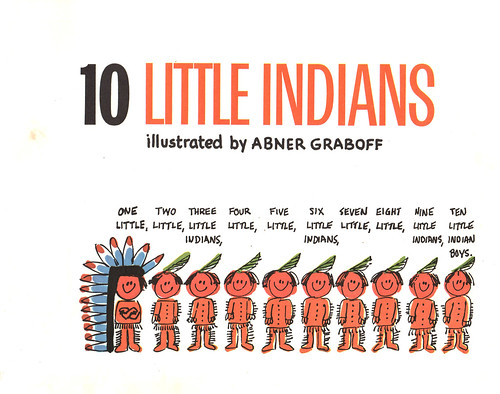
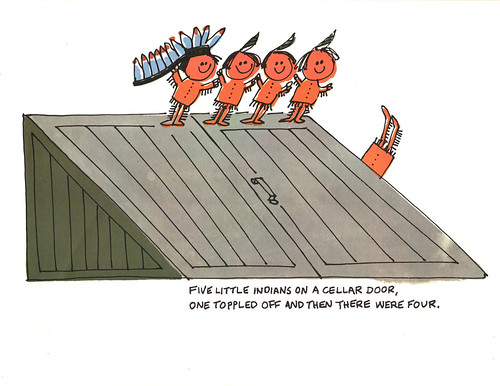
J: Dad used just about every medium in his work. Pen and ink, felt markers, cut paper (even cut sandpaper), string, toothpicks, leaves and what ever else was on hand. He was the first illustrator that I know about who would build a character out of paper and let it float over a background and photograph it using a single, hard light source to cast shadows so it appeared three-dimensional on the printed page. “Do Catbirds Have Whiskers” is a good example of this.

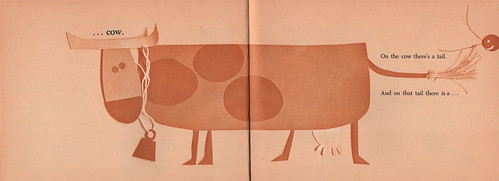
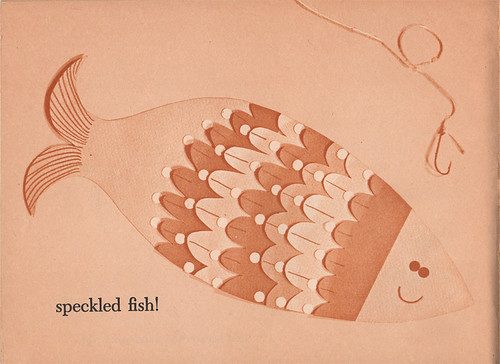 From Do You Want to See Something?, 1965.W: As mentioned before, I have what was listed as the first children's book he illustrated, "The Sun Looks Down", done in 1954. How many books did he illustrate that you know of?
J: Below is a list of my father’s books that I compiled from the Internet. I’m not sure if it’s complete or not:
Books Illustrated by Abner Graboff1954
The Sun Looks Down, by Miriam Schlein, pictures. by Abner Graboff. Abelard-Schuman.
1956
Rainbow In The Morning, by Carl Withers, pictures. by Abner Graboff. Abelard-Schuman.
1957
A Tale Is A Tail, by Katherine Mace, pictures. by Abner Graboff. Abelard-Schuman.
1958
Abelard Folk Song Book, by Norman Cazden, pictures by Abner Graboff. Abelard-Schuman.
1958
I Want To Whistle, by Anne Alexander, pictures by Abner Graboff.
1958
The Daddy Days, by Norman Simon, pictures by Abner Graboff. Abelard-Schuman.
1959
Of Course, You’re A Horse!, by Ruth Shaw Radlauer, pictures by Abner Graboff. Stella Greenwald.
1959
Merry Ditties, (song book for piano and guitar), by Norman Cazden, pictures by Abner Graboff. Bonanza Books.
1960
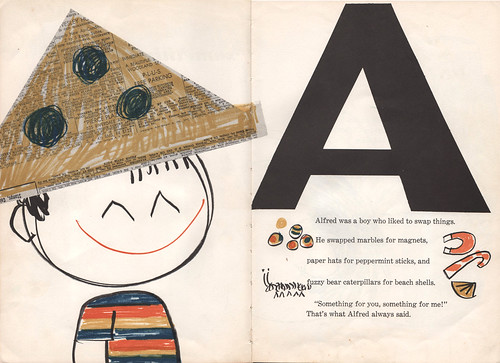
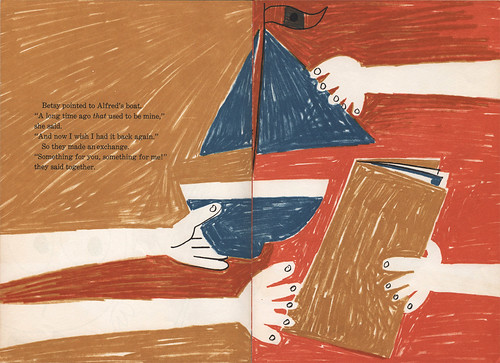
Something For You, Something For Me, by Mabel Watts, pictures by Abner Graboff. Abelard-Schuman.
1960
Noise In The Night, by Anne Alexander, Pictures by Abner Graboff. Rand McNally & Company.
1960
Mr Angelo, by Marjory Schwalje, pictures by Abner Graboff. Abelard/Schuman.
1961
Please Don’t Feel Horace, by Miriam Young, pictures by Abner Graboff. A Dial Junior Book.
1961
I Know An Old Lady, by Alan Mills, pictures by Abner Graboff. Rand McNally. Scholastic Book Services.
1962
Weeks And Weeks, by Mabel Watts, pictures by Abner Graboff. Abelard-Schuman.
1963
A Fresh Look At Cats, by Abner Graboff. F. Watts
1964
The Hungry Goat, by Alan Mills, pictures by Abner Graboff. Rand McNally
1964
No Sort Of Animal, By Mary B. Palmer, pictures by Abner Graboff. Houghton Mifflin.
1965
Heat, by Howard Liss, pictures by Abner Graboff. Coward-McCann
1966
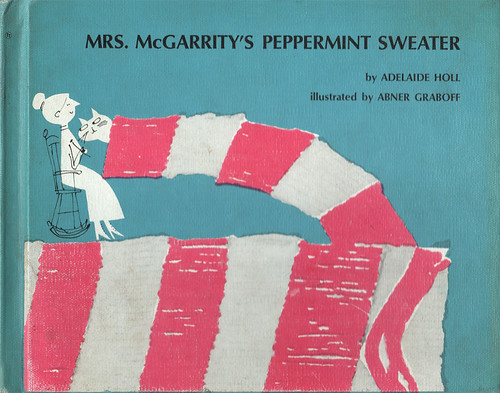
Mrs. McGarrity’s Peppermint Sweater, by Adelaide Holl, pictures by Abner Graboff. Lothrop, Lee & Shepard Co,, Inc.
1965
Do You Want To See Something?, by Eve Merriam, pictures by Abner Graboff. Scholastic Book Services.
1967
Do Cat Birds Have Whiskers? By Abner Graboff. G. P. Putnam’s Sons
1967
Willie & Winnie & Wilma The Wicked Witch, by David C. Whitney, pictures by Abner Graboff. Franklin Watts, Inc.
1968
Skippy The Skunk, by David C. Whitney. Pictures by Abner Graboff.
1968
Would You Put Your Money In A Sand Bank?, by Harold Longman, pictures by Abner Graboff. Rand McNally & Company.
1968
Crystal Magic, by Eugene David, Pictures by Abner Graboff. First Cadmus Edition.
1969
Limpy The Lion, (See and Say Sounds Series) by David C. Whitney. Pictures by Abner Graboff. F. Watts
1969
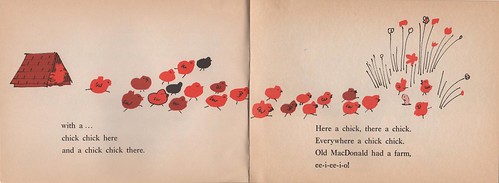
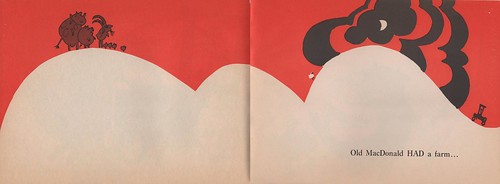
Old Macdonald Had A Farm, by Abner Graboff. Scholastic Book Series.
1969
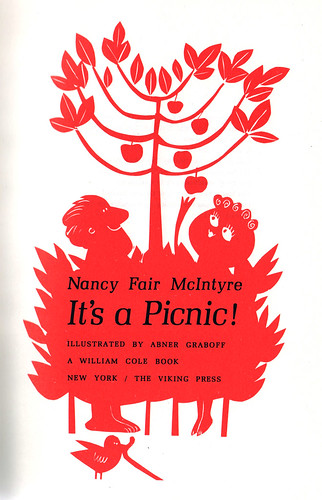
It’s A Picnic!, by Nancy Fair McIntyre, pictures by Abner Graboff. NY Viking
1969
Ann’s Ann-imal, by David C. Whitney, pictures by Abner Graboff. Watts.
1975
Do You What I See? No! I See Something Else, by Abner Graboff. Scholastic Book Series.
1976
In A Cat’s Eye, by Abner Graboff. The Bookstore Press.
This is the end of Part 1 with my interview with Jon Graboff.-----------------------------------Next:
The Art & Life of Abner Graboff Part 2Previously:
Who was Abner Graboff?You can see more of my scans of Abner's books in my
Abner Graboff Flickr set.